[ad_1]
Prices like these do not emerge in isolation. They are produced at the intersection of rarity, capital, timing and narrative. And this sale sits squarely at that convergence.
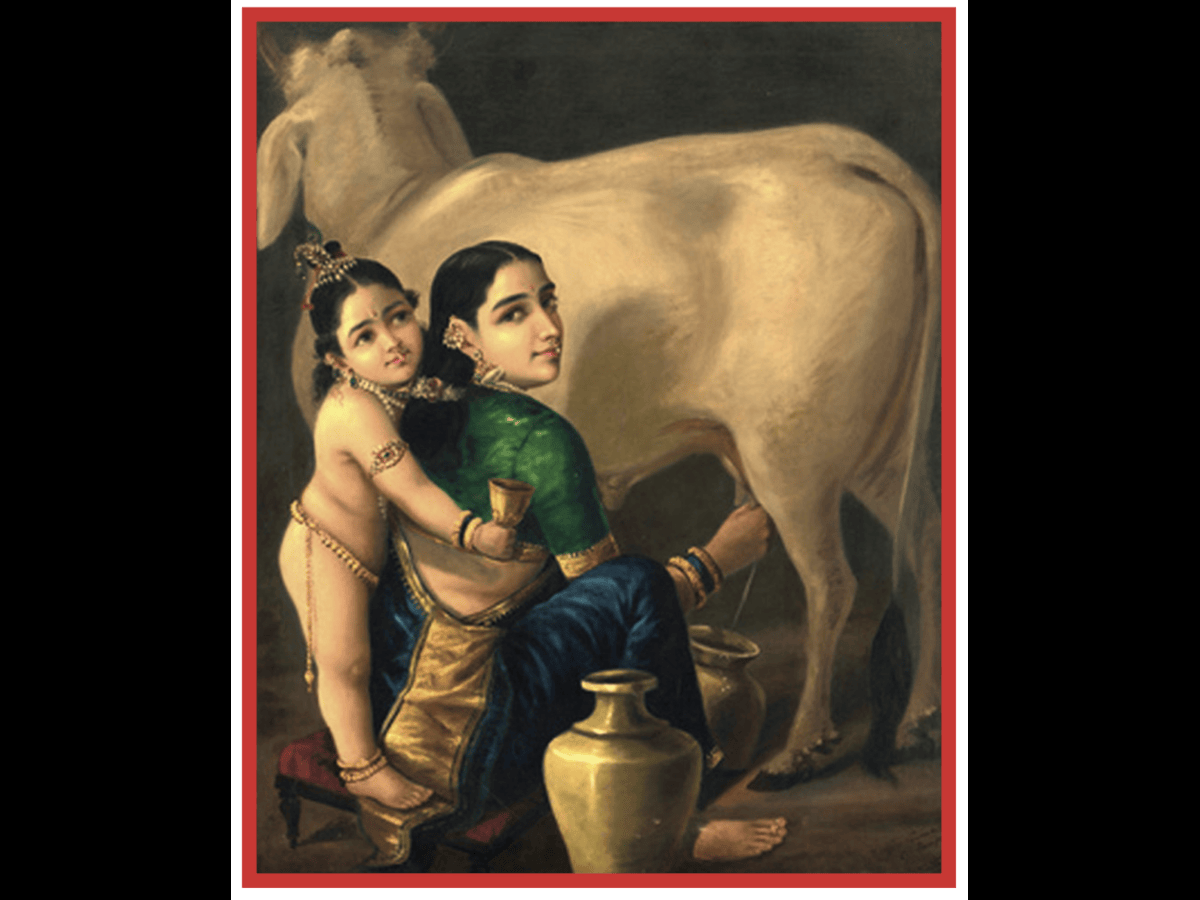
At a surface level, this is a painting by Ravi Varma. At a market level, that classification is too simplistic. The work belongs to a narrow tier of top-quality examples defined by subject, scale and historical importance. A segment where supply is virtually non-existent, and prices do not move incrementally but jump to a new level.
This scarcity is further reinforced by the fact that Ravi Varma is among a select group of artists classified as ‘National Treasures’ under the Antiquities and Art Treasures Act, 1972. Works falling under this category are deemed of crucial cultural importance and cannot be exported out of India, effectively constraining supply within a closed domestic market.
When benchmarks don’t exist, prices are created
One of the most overlooked aspects of this sale is the absence of a true comparable. When a work of this calibre appears after a long gap, buyers are not bidding within an established range. They are, in effect, creating one. Layer this with timing. The Indian art auction market closed 2025 at `2,450 crore and has already seen Rs.653.3 crore deployed in March 2026 alone. Liquidity is strong, confidence is high, and momentum is concentrated at the top end. In such conditions, price discovery accelerates. The question is no longer: “What did the last Ravi Varma sell for?” It becomes: “What is this work worth now?”
A market defined by scarcity
Over the past six years, just 16 works in oil on canvas by Ravi Varma have appeared at auction, accounting for roughly Rs.381 crore in turnover; with every single one finding a buyer. This is not a market defined by frequency, but by scarcity. Supply is sporadic but consistently absorbed, leaving little room for price resistance. Buyers are not choosing between options; they are waiting for an opportunity. When a work of sufficient importance appears, prices step up sharply.
The trajectory of record prices reflects this dynamic. In 2016, Ravi Varma’s ‘Radha in the Moonlight’ set a benchmark at Rs.23 crore. In 2023, ‘Yashoda and Krishna’ nearly doubled that to Rs.43.7 crore, supported by its historical linkage to Fritz Schleicher (manager of the Ravi Varma Fine Arts Lithographic Press), the strength of its subject, and stronger post-pandemic capital deployment.
The Rs.167.2-crore result is a clear break from this trajectory. Rather than gradual appreciation, the market is demonstrating step-change pricing, where each new benchmark is defined as much by narrative and provenance as by aspiration and demand.
From collectable to trophy asset
At Rs.167.2 crore, this acquisition moves beyond collecting to trophy-asset behaviour. The identity of the buyer matters. Acquired by Cyrus Poonawalla, one of India’s most prominent industrialists, the transaction reflects a shift in which price sensitivity declines and narrative, legacy, and positioning take precedence.
The painting is no longer just an artwork; it has become a cultural and financial marker. There is another important layer. The work will be made available for public viewing, framing it as a cultural asset rather than a purely private possession. This elevates it to a quasi-institutional status and strengthens the narrative supporting its price. The conversation shifts from “what someone paid” to “what this represents.”
What made this possible
The answer lies in the convergence of rarity, capital, timing and narrative. Rarity, in the form of an exceptionally limited supply of museumgrade works, is further reinforced by its status as nationally significant heritage. Capital, reflected in a small but increasingly deep pool of buyers capable of transacting at this level. Timing, aligned with strong liquidity and confidence at the top end. Narrative is embedded in the subject, historical positioning, and the way the work was presented.
The auction itself plays a critical role. Time-bound bidding, competitive tension, and psychological momentum can push prices beyond static valuations. In such environments, value is not merely assessed; it is competed for. Saffronart’s role is central. Positioning, estimates, and narrative all shape perception and confidence. An auction house is not just a platform, but an active participant in price formation.
When these forces align, price is not discovered; it is set by those with the capacity and conviction to act.
What this moment signals
Does a Rs.167.2 crore result indicate a maturing market with greater financial strength? Or does it reflect increasing concentration, where value is driven by a small set of participants? Recent data suggests a market where ultra-high-value transactions are becoming more frequent, capital at the top end is deepening, and price discovery at this level is increasingly detached from the rest of the market.
The real test lies ahead. Do moments like this expand participation and deepen the market? Or reinforce a system where growth is driven primarily at the top?
For now, this sale of Ravi Varma’s work stands as a powerful testament to how far the Indian art market has come. Undoubtedly a moment of historic significance. The first Indian artwork to cross the Rs.150-crore mark.
The author is Indian Art Market Analyst & Commentator
[ad_2]
Source link