
[ad_1]
Over the past few years, digital art has experienced exponential growth, transforming the artistic landscape and challenging traditional notions of creativity (and indeed, how art is presented and experienced – from the best museums to the home). Not only has it allowed creators to do things that were simply not possible even a year ago, it has opened up a whole new sector for collectors.
In its simplest form, digital art is any work that utilises digital technology. That includes everything from Adobe Illustrator to DALL-E, an artificial intelligence (AI) system that creates images from text prompts. It also includes non-fungible tokens (NFTs) – virtual assets with ownership authenticated by the Ethereum blockchain. NFTs can be anything from virtual real estate to gaming collectibles, but it is NFT art that has grabbed most of the headlines. Who can forget Beeple’s ‘Everydays: The First 5000 Days’, which sold at Christie’s for $69.3 million in 2021.

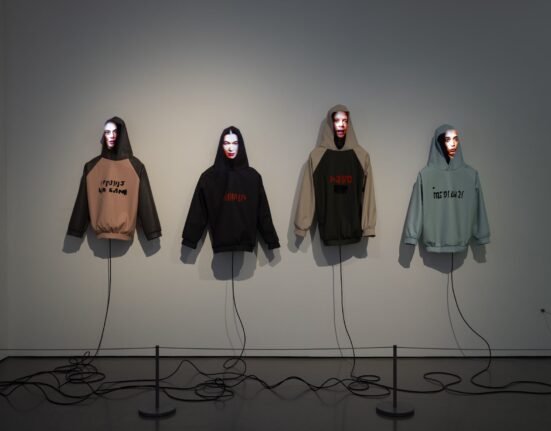
“Digital art is an expansion of contemporary art, embracing new modes of production, distribution, engagement and appreciation of art,” say Alfredo Cramerotti and Auronda Scalera, the curators of next year’s Art Dubai Digital. “Artists now work not only from their studio, as it used to be, but increasingly from the laptop, generating amazing and immersive artworks that are produced, installed and experienced both on-site and also online.”
However, the world of digital art is not an easy one to navigate. The volatility of NFTs is notorious, while the value of owning a digital file that can be endlessly duplicated is debatable. Then there’s AI-generated art, which has its own set of issues. The primary fear being that AI could replace artists altogether. Last year, a piece of work created using Midjourney won a digital art prize at the Colorado State Fair.
It’s easy to see the allure. When the Canadian artist Beth Frey began experimenting with NightCafe about 18 months ago, she was initially impressed by the ways in which the AI art generator created the ‘feel’ of something through an imperfect representation. The failures of older AI technologies, she says, brought out their materiality, creating images that looked different to something that was simply trying to emulate reality. Her interest was piqued. She has since become one of the stars of AI art, creating an ever-increasing library of grotesque bodies using DALL-E.
[ad_2]
Source link