[ad_1]
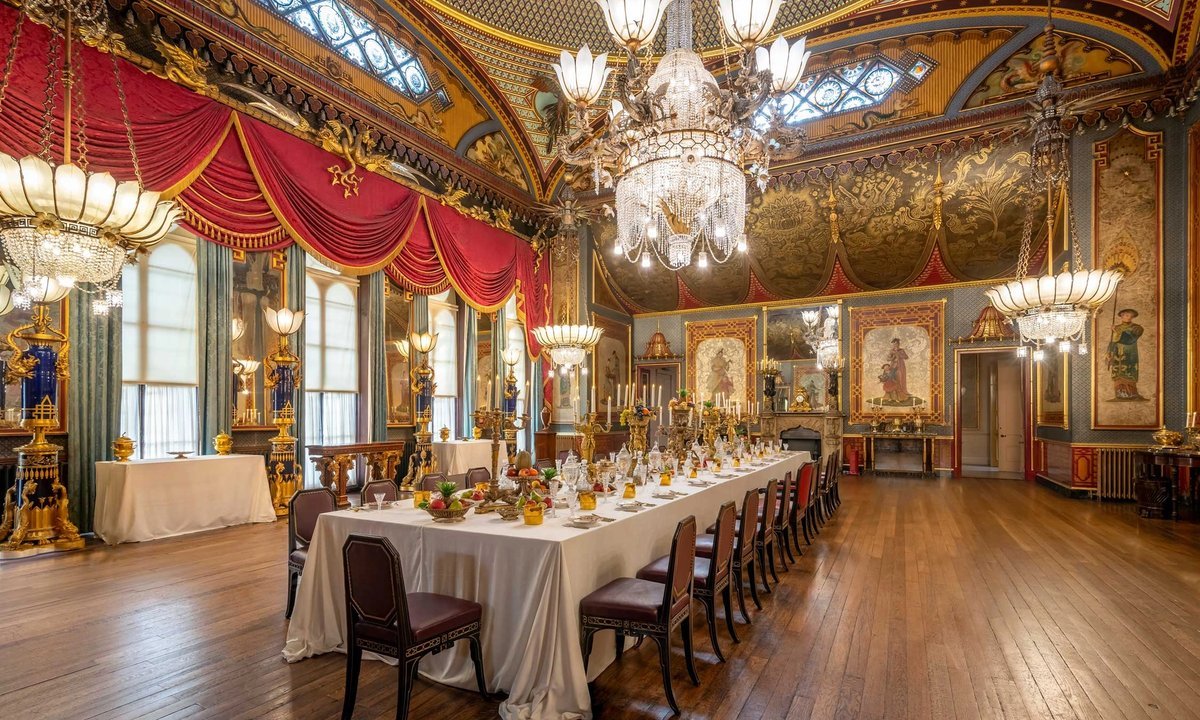
Amongst the Regency splendour and opulent chinoiserie of Brighton’s Royal Pavilion, a series of contemporary art “surprises” will be popping up, with live art and performance taking centre stage. The ticketed event, on 30 May, is being staged by the Adelaide Salon, an arts organisation on a mission to revive the art scene in the English coastal city.
Brighton has suffered some notable losses to its art scene over the past few years, including, in 2023, the closure of Brighton University’s Centre for Contemporary Art (CCA) and the withdrawal of Arts Council funding at Fabrica gallery, ending its exhibition programme. The Adelaide Salon was founded in 2024 in response to the closures, and with a mission to build a “cultural ecosystem” in Brighton “to rival and encourage other cities here and abroad”, according to a website statement. It is run and self-funded by Pascal Dowers, a former gallerist, carbon manufacturer and designer, and his partner Paulina Anzorge, an artist and curator.
Dowers and Anzorge began staging exhibitions and events at their house in Adelaide Crescent—around the corner from Maureen Paley’s Morena di Luna gallery—during 2024’s Artists Open Houses festival (an annual event that gives public access to artist studios and residences in Brighton and Hove, currently on show until 25 May).
The Adelaide Salon events, inspired by the Parisian salons of the 17th to 19th centuries, bring together artists, scientists, philosophers, designers and musicians to “cross-fertilise and collaborate”, Dowers says, “creating a new format for the art world”. A recent event in December included a talk on artificial intelligence and consciousness by Anil Seth, the neuroscientist behind the hallucinatory science installation Dreamachine, alongside Tea Service by artist Isobel Smith, for which she tapes an unfeasibly large amount of crockery to her head in a performance “oscillating between solemn ceremony and absurdity, poking a stick at rigid norms and class hierarchy”, Smith tells The Art Newspaper.
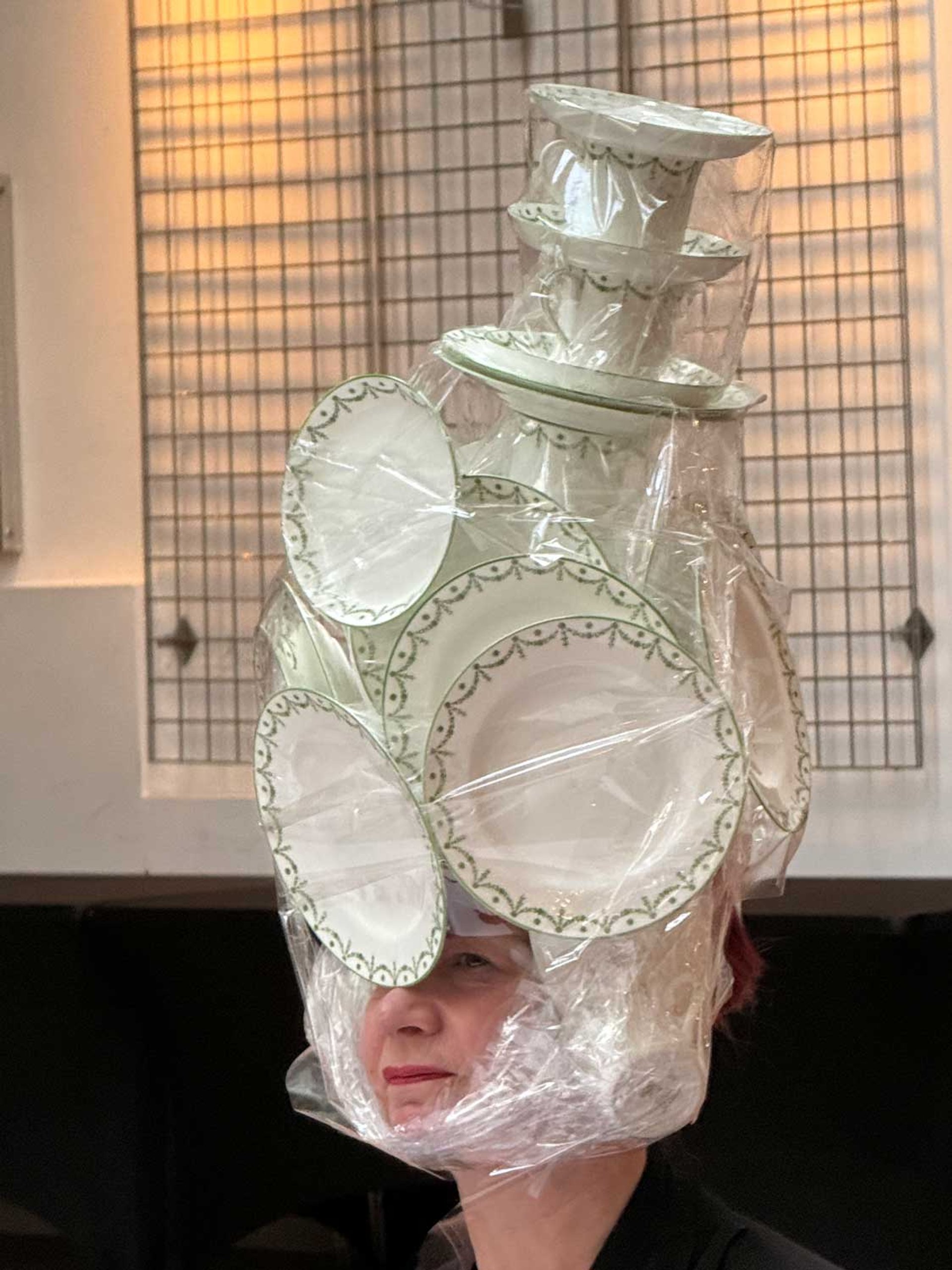
Isobel Smith’s Tea Service performance at the Adelaide Salon Photo: Rosie Spencer
This merging of different disciplines is typical of the Adelaide Salon, which has now taken over the Founders Room at the Brighton Dome—primarily a music and theatre venue—with the exhibition Act O (until 25 May), as part of the month-long Brighton Festival. The 3 May opening of the space, which will later be converted into a permanent contemporary art gallery, included a series of performance pieces by Brighton-based artists alongside a live sound performance by the musician M3ON. The performance Again and Again (2026) by Andy Ash in collaboration with Nina Garstang brought to mind early performance works by Marina Abromović and Ulay, with Ash and Garstang tethered together, pulling and pushing against each other to create a “shifting physical connection” that asks “how far collaboration can stretch before it pulls apart”, Ash says. There was also a reprisal of Smith’s Tea Service alongside captivating performance works by the artists Aisling Zambon, Darvish and others.
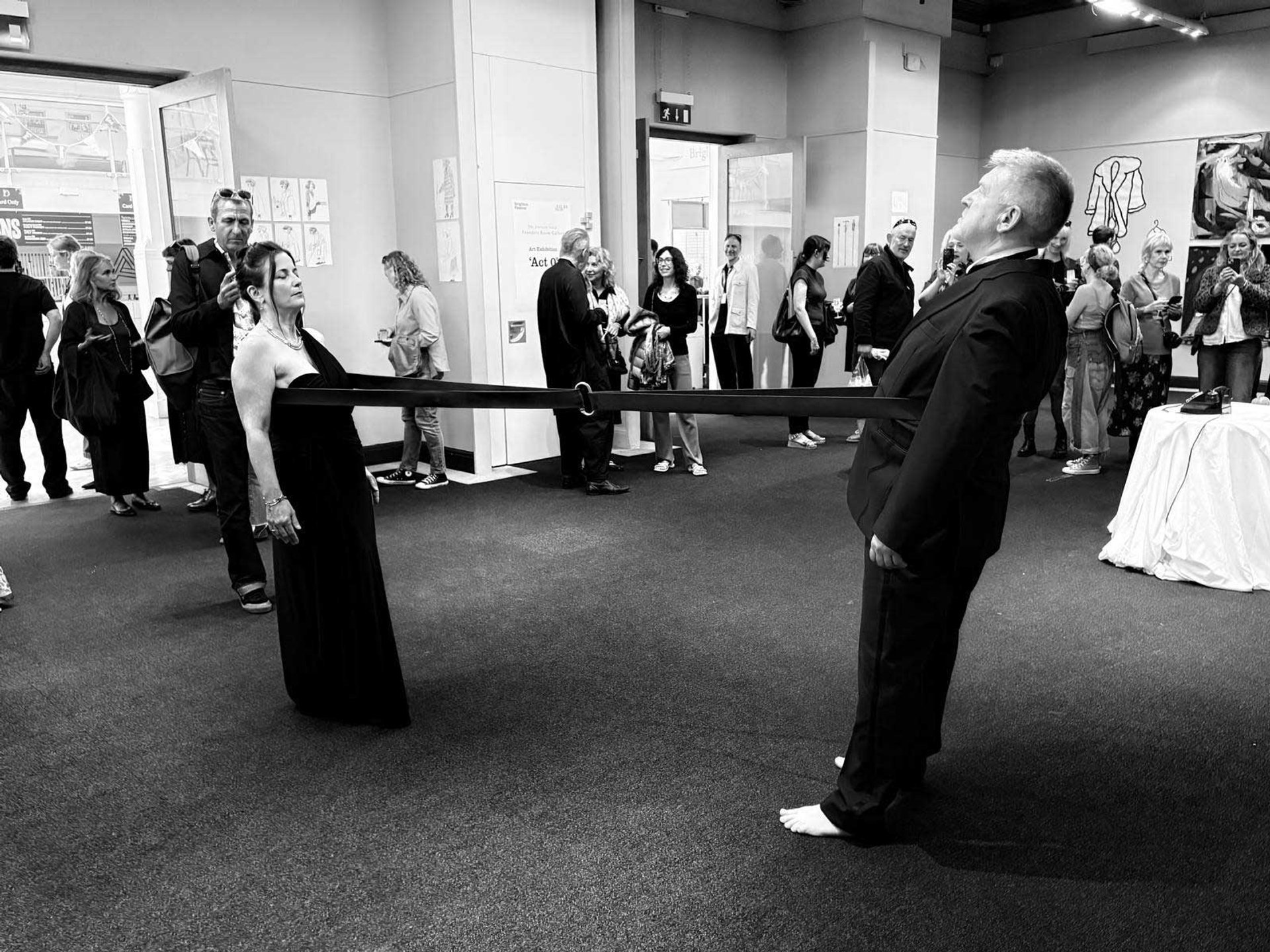
Again and Again (2026) by Andy Ash in collaboration with Nina Garstang, at the opening of Act 0 at the Founders Room, Brighton Dome Photo: Carl Smith
These performances were a taster for what is to come during the Adelaide Salon’s gala takeover of the Royal Pavilion at the end of the month. “It’s the first time anything like this has happened in a royal palace,” Dowers tells The Art Newspaper. “The last time it happened was 175 years ago. That was when the whole town was invited. The king and queen had just moved out.” Much of the contents of the lavish, onion-domed building, which was constructed in the early 1800s as a seaside pleasure palace for King George IV, are loaned by the Royal Collection, but, uniquely for a former royal palace, the building is owned by the local council, and is now managed by the Royal Pavilion and Museums Trust.
The whole of the pavilion’s 10,000 sq. ft ground floor will be taken over for the gala (tickets are £100), which will include a wide range of contemporary art as well as music and fashion. The kitchen will be turned into a space that “cooks up art”, Dowers says, including the artist Phil Tyler’s live production of three simultaneous portraits. There will be performances in the banqueting hall that reference the palace’s colonial history, a room dedicated to artist film works, “cheeky, erotic” work by the artist Helen Beard in the king’s bed chambers, installation works by Delaine Le Bas and many other artworks throughout the palace, including works by the artists showing and performing at the Founders Room.
In the spectacular music room, “we’re going to have the main centrepiece, which is a five metre by five metre tapestry by Stanley Donwood and Thom Yorke”, Dowers says. “There are going to be a series of surprises throughout the palace. That’s what the Adelaide Salon is about, this immersive experience of art, performance, philosophy, debate, film, fashion. The whole thing is for people to discover, a new meeting of heritage and contemporary art.”
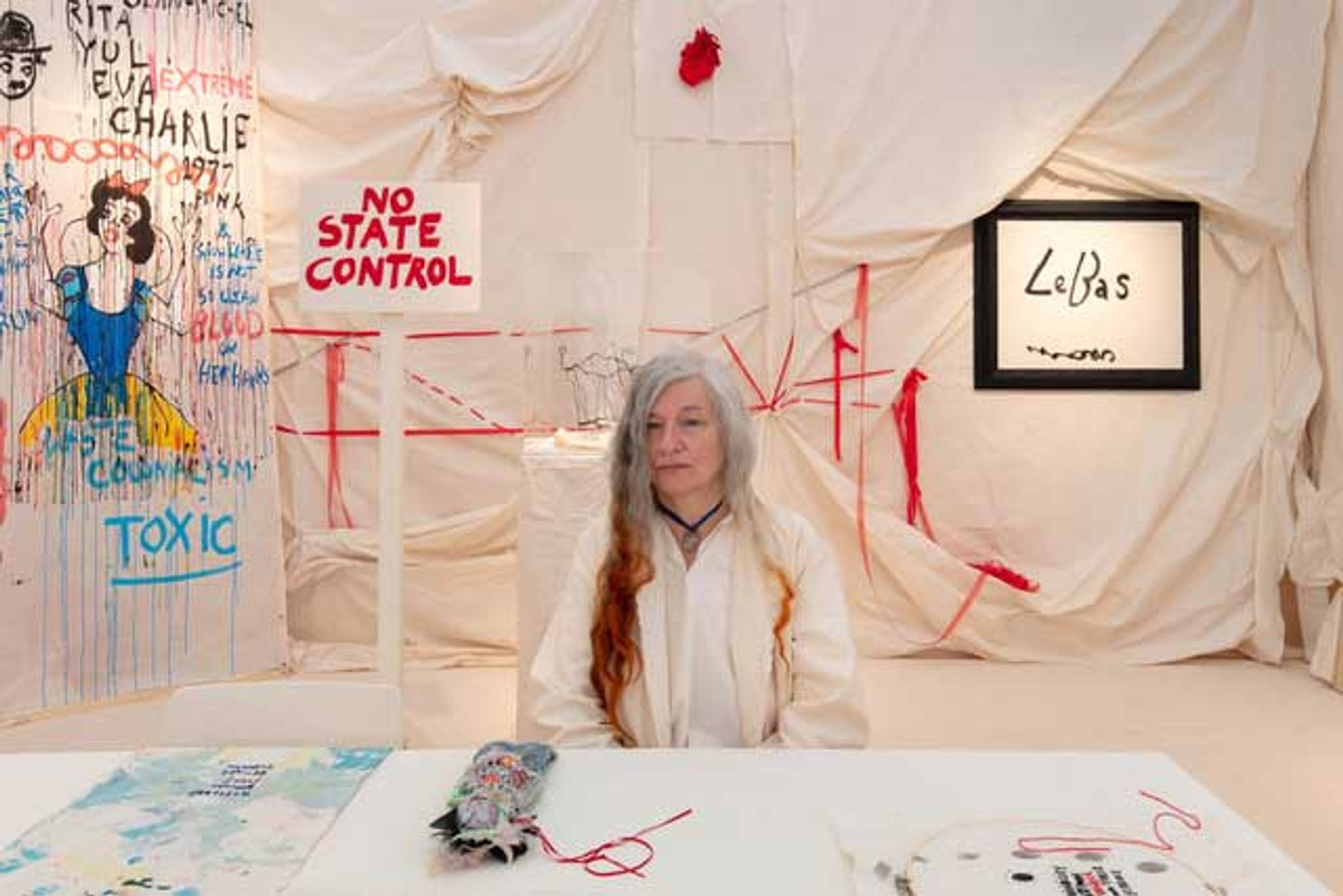
Off Kilter (2024) by Delaine Le Bas, who will be showing in the Royal Pavilion’s Long Gallery Photo: Alexander Christie
The idea is that this will become an annual event, and some of the artworks will remain in the palace throughout the year. Aside from this collaboration and the Brighton Dome project, the Adelaide Salon is planning on opening a permanent large contemporary art space in the future, something to rival the likes of Turner Contemporary in Margate, Towner Eastbourne and Hastings Contemporary along the coast. “We’re trying to make that happen, from many angles,” Dowers says. “We’ve attracted a lot of people who are very interested in seriously making that happen now. Visual art in Brighton has had its ups and downs and now we’re aiming to elevate it and bring it into a new sphere.”
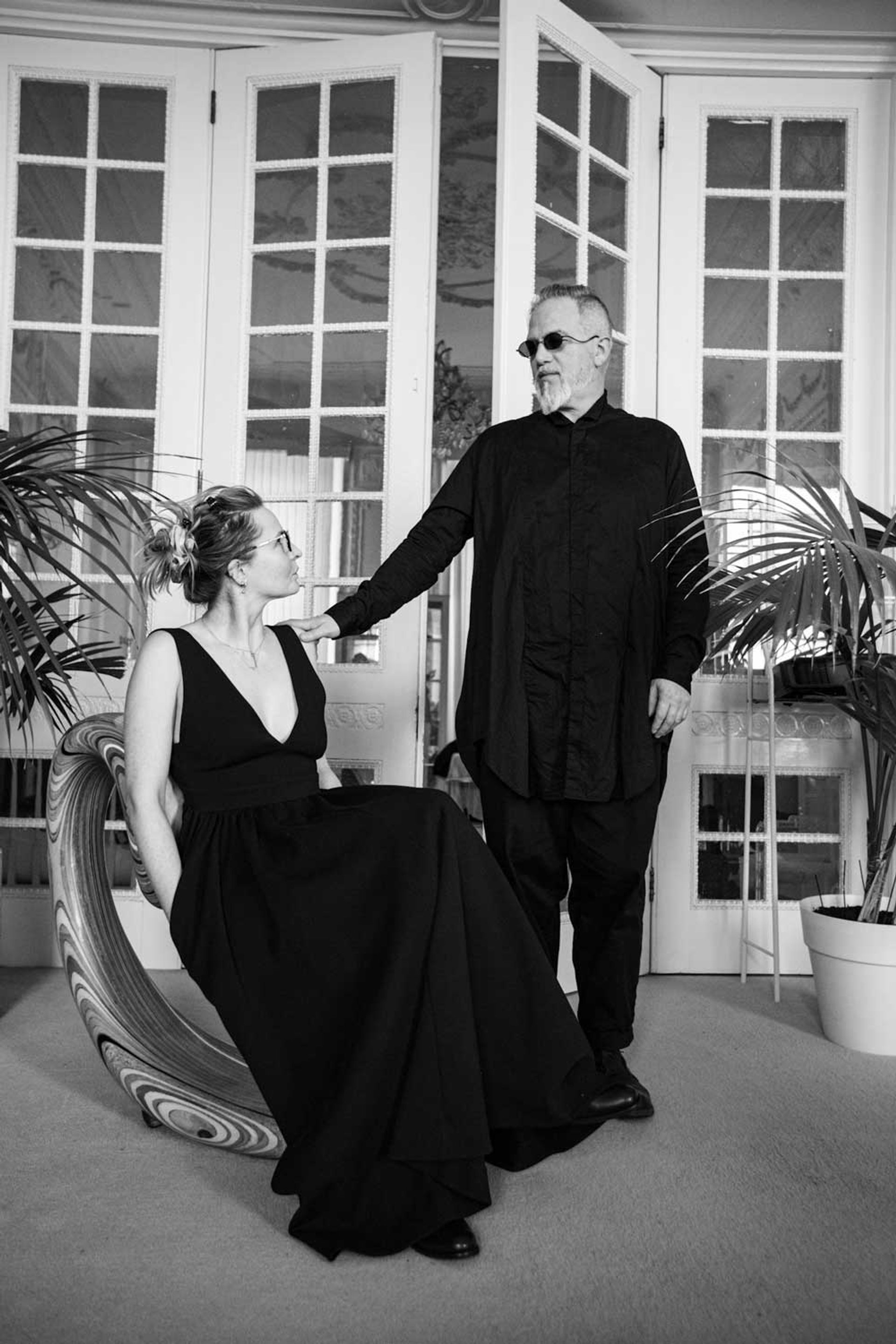
Paulina Anzorge and Pascal Dowers, co-founders of the Adelaide Salon. “There are lots of hidden gems in Brighton, lots of the right ingredients, and we’re creating some of the recipes for that to come together,” Dowers says Photo: Violetta Orlauskaite
Perdita Sinclair, a painter based at Brighton’s Phoenix Art Space—which hosts studios for around 120 artists, and is open to the public this weekend (15-18 May)—tells The Art Newspaper: “Brighton has historically had a problem with taking itself seriously and this, coupled with a lack of opportunities, has often meant that artists who live here don’t show here. I hope that with what the Adelaide Salon is doing, more serious opportunities will come to artists living in the town. The wider public might then see the creative riches that have remained behind closed studio doors in Brighton. Paulina and Pascal are helping to bring more of it into the light.”
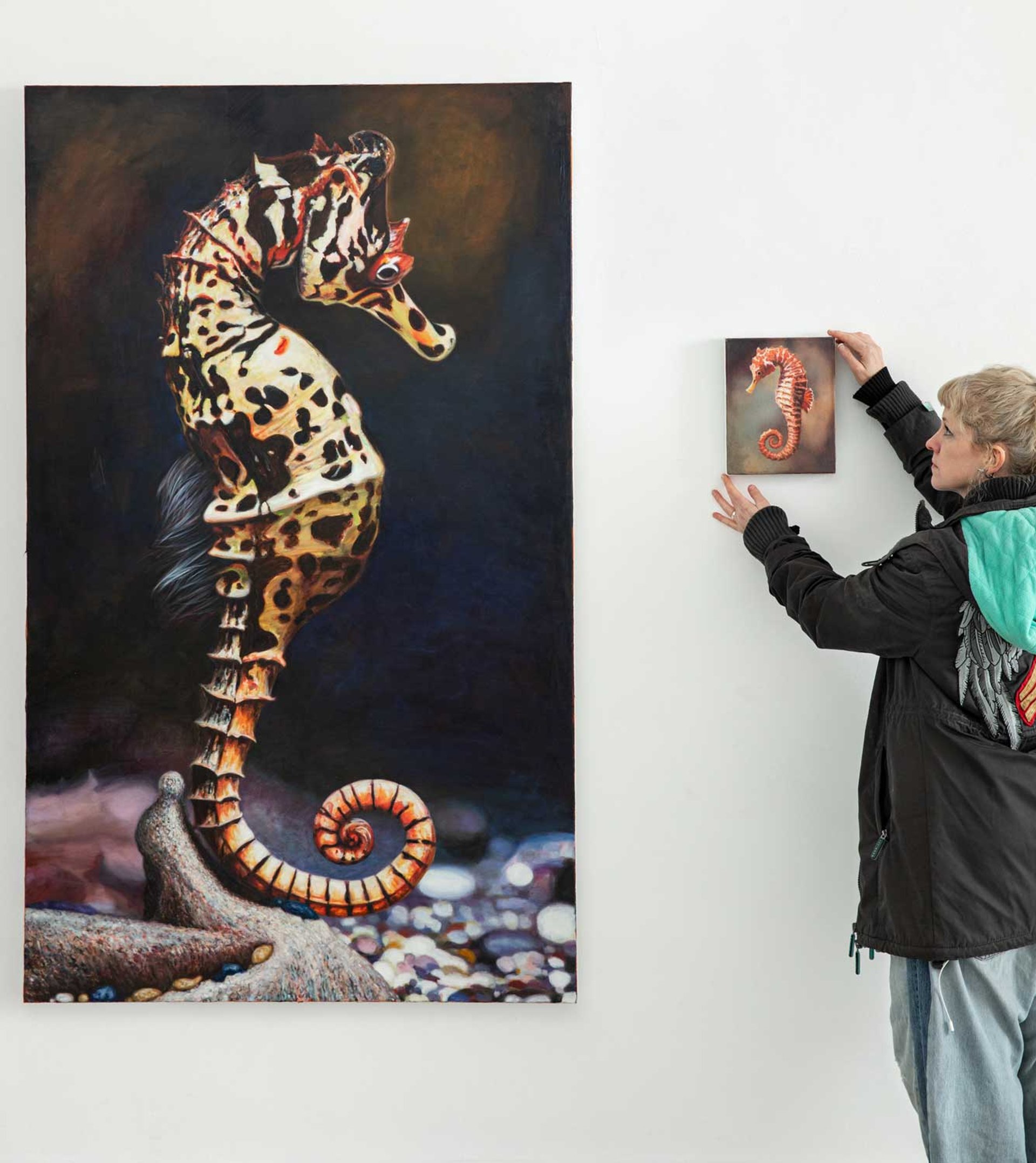
Perdita Sinclair with her painting Nøkken (2026) at Phoenix Art Space, Brighton Photo: Phil Adams
“We want to help artists when the art world is in turmoil. And also show that by collaborating and being more expansive and generous and sharing, which not everybody enjoys doing, things can be done,” Dowers says. “Philanthropy needs to evolve, and needs to stop attaching conditions to it in a way. There’s a lot of investment that expects a return. Sometimes if you don’t expect a return, you might get more return than you think.”
- Adelaide Salon x Royal Pavilion Art Gala, Brighton, 30 May
- Act 0, Founders Room, Brighton Dome, until 25 May
- Tony Mentel: The Male Gaze, the Adelaide Salon, Hove, until 25 May
[ad_2]
Source link