[ad_1]
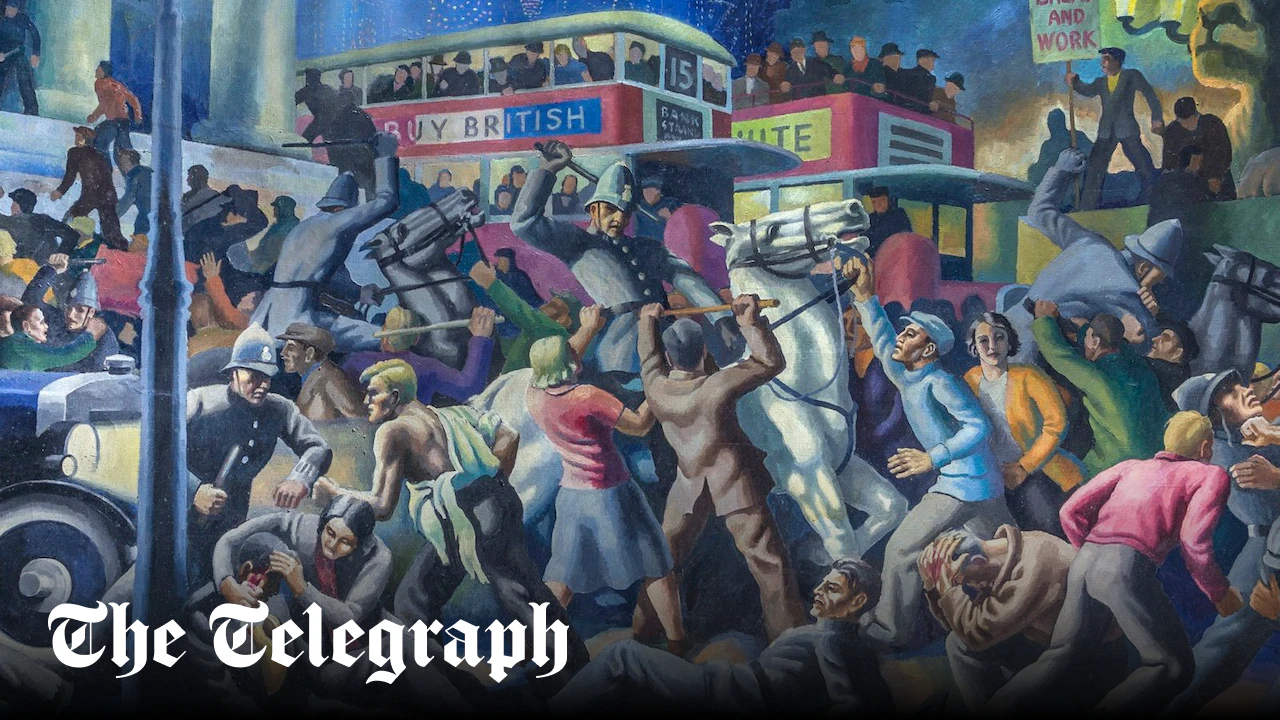
The AI’s first Bulletin defined its aim as “The International unity of artists against Imperialist War, War on the Soviet Union, Fascism and Colonial Oppression”, and outlined the following practical measures:
- The uniting of all artists, in Great Britain, sympathetic with these aims, into working units ready to execute posters, illustrations, cartoons, book-jackets, banners, tableaux, stage decorations, etc.
- The spreading of propaganda by means of exhibitions, the press, lectures and meetings.
- The maintaining of contacts with similar groups in 16 other countries.
The AI’s founding members weren’t concerned with “forging an epochal contribution to English art or any self-conscious aesthetic agenda”, like other artistic movements of the time, such as Paul Nash’s Unit One. Nine months after Hitler had become chancellor of Germany, they were aware of the dangers beginning to unfold in Europe – in part because three of the artists in the room were exiles from Berlin – and were intent on mobilising their artistic talents in the service of a global political struggle.
The artists who gathered in Covent Garden that evening were mostly young and relatively unknown, and like many of their generation, they’d felt the full force of the economic slump of the 1930s. Rowe would later recall that “there would be at least 10 people in front of you for every job… we were all living in poverty, there was no doubt about that”. The curator Andy Friend writes, in his new history Comrades in Art, that “collectors on both sides of the Atlantic were suffering from the Wall Street crash, most galleries were avoiding all but the safely established, and commercial work of every type was becoming scarcer, the rate for the task ever meaner”.
In its early days, as founding member James Boswell recalled, the AI was “a mixture of agit-prop body, Marxist discussion group, exhibitions and anti-war, anti-fascist outfit.” Calibrating these different aspects was no mean feat, and Black, the chairman, recognised the need to “[attract] sympathisers regardless of generation, artistic métier, stylistic persuasion and whether or not individuals were signed-up true believers in the Soviet five-year plan”.
[ad_2]
Source link