[ad_1]
Pace Gallery has scored the global representation of the Constantin Brancusi Estate, the mega-gallery said this morning.
It will stage an exhibition by the pioneering modernist sculptor in London this fall, drawing from the estate’s archival material as well as independently sourced secondary market works. The show will be curated by the acclaimed art historian Jérôme Neutres.
The announcement is savvily timed. This evening, Brancusi’s 1913 work Danaïde, from the collection of the late media mogul S.I. Newhouse, goes on the auction block at Christie’s in New York, estimated at $100 million. Its sale will establish a new auction record for the artist. As one of the top works for the May auction season, Danaïde has been in the news—and an ad starring Oscar-winning actor Nicole Kidman. This past weekend, people waited in line outside the house’s Rockefeller Center headquarters to view it.

Constantin Brâncuși, Danaïde (c. 1913). Photo: Christie’s Images Ltd 2026.
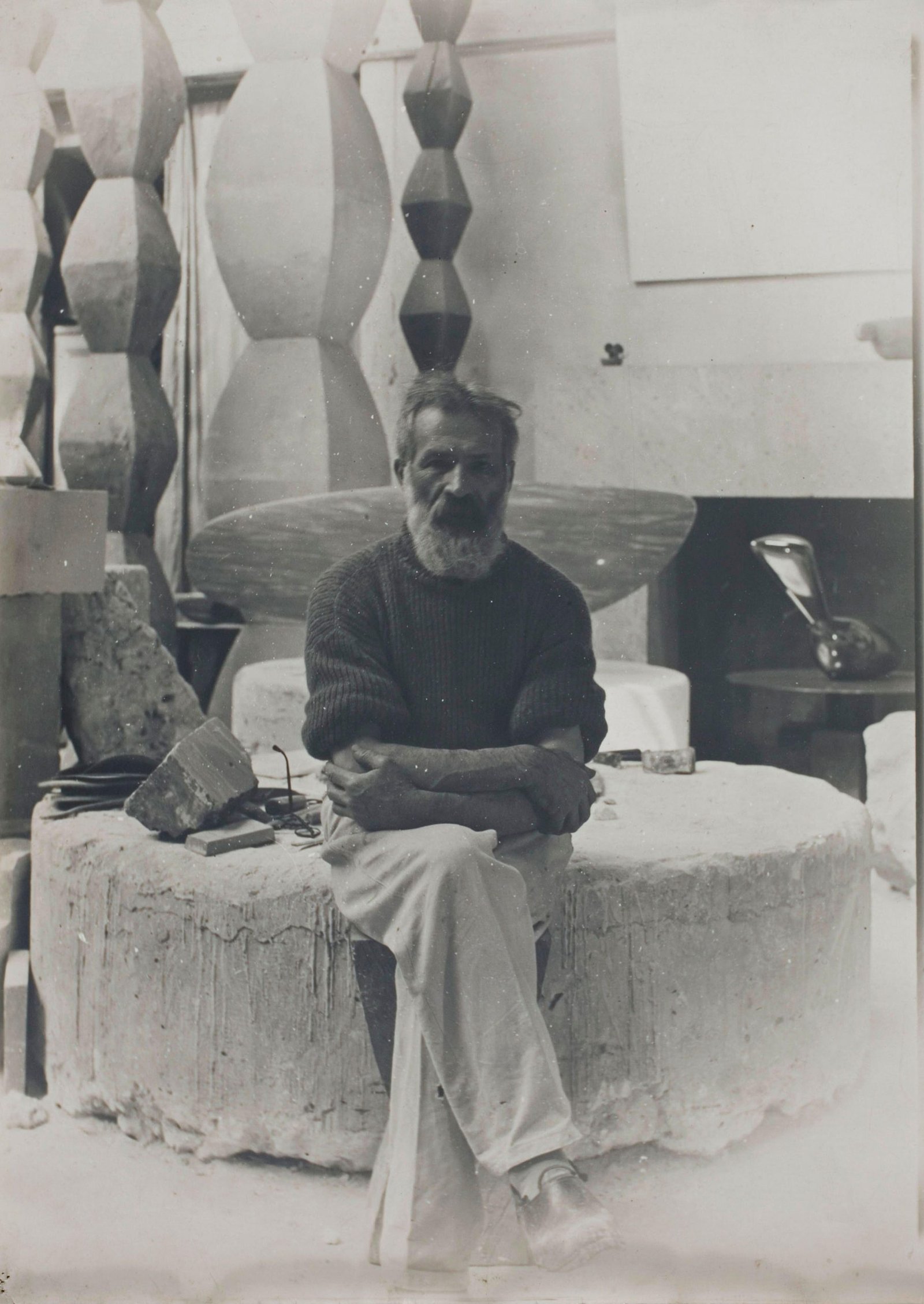
Born in Romania, Brancusi (1876–1957) is known for exquisite sculptures that transform human figure into essential, abstract elements. One of the 20th century’s key artists and a leading exponent of modernism, Brancusi was an active if reclusive member of the School of Paris, a community of artists working in Paris in the decades before World War II. His art draws on Romanian folk art, African wood carvings, and Cycladic figures. He often made the bases of his sculptures part of the works, a major formal and conceptual contribution to the development of avant-garde art.
“When it comes to these great artists, if you want a shot at being part of that market, it isn’t some backroom dealing anymore,” Marc Glimcher, Pace’s CEO said. “People want to recognize that you are an authority. We made a huge investment in these artists, this period. And we have a huge amount of expertise.”
The Brancusi estate had been previously represented by Kasmin gallery, which closed last year following its founder death. At Pace, it joins more than 30 artist estates, including those of Alexander Calder, Mark Rothko, and Agnes Martin. The gallery has also been making inroads into the Amedeo Modigliani market, with the publication of a six-volume, $1,800 catalogue raisonné this year; its 2,000 copies have sold out.
Great Brancusi sculptures rarely come to market, but when they have, auctions have been generally been the preferred path for sellers. Newhouse bought Danaïde at Christie’s for about $18.2 million in 2002, when it became the most expensive sculpture ever sold at auction up to that point. The artist’s current auction record was set for Jeune fille sophistiquée (Portrait de Nancy Cunard), which made $71 million in 2018, also at Christie’s.
“As you can see from this week, the Brancusis in this world are held in a very small number of the greatest collections,” Glimcher said. “They’re held very tightly, so tightly that there’s been virtually no trade, or very little, for 50 years.”
That’s about to change, as a result of the biggest generational wealth transfer in history, and Pace wants to be there when it happens, he said.
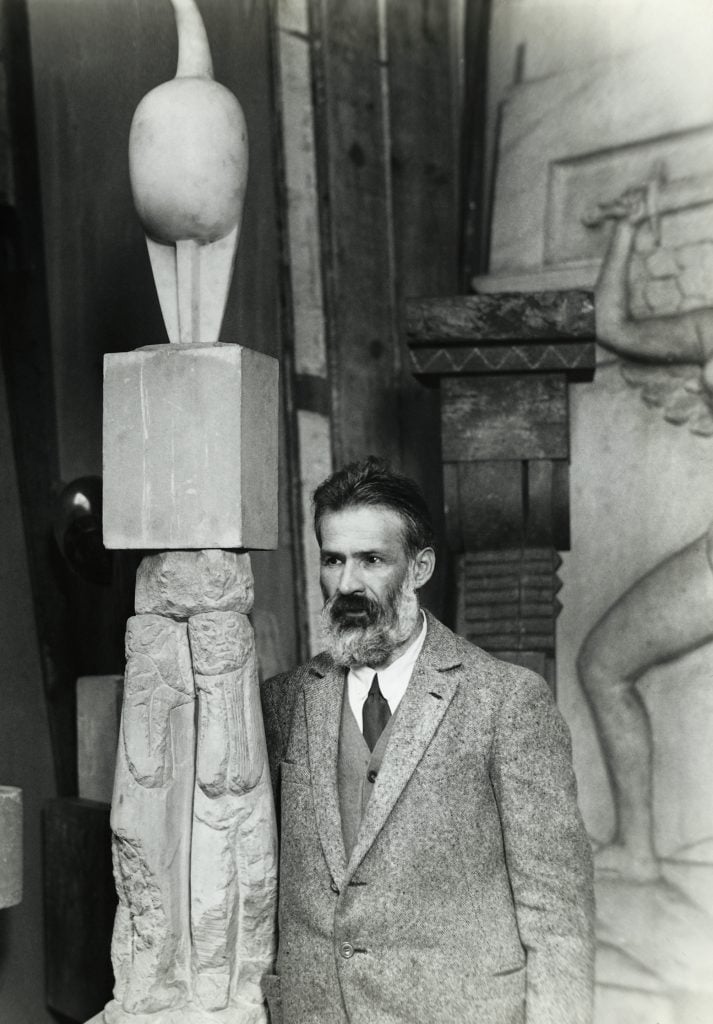
Constantin Brancusi. Photo: George Rinhart/Corbis via Getty Images.
“In the next chapter of Brancusi, it’s us versus them,” Glimcher said, referring to the auction houses. The way he sees it, either Brancusi works will “become this shiny epitome of $100-million-plus art. Or we get in there. We want them to be in shows. We want them to be seen in a different way.”
While the estate doesn’t have Brancusi’s original sculptures to sell, it does own some posthumous casts that are rising in value, and it has a lot of archival material. Importantly, it also has market intelligence about the whereabouts of other Brancusi works. Its imprimatur lends authority to Pace to become a market center for Brancusi’s buyers and sellers, a position that’s currently vacant, according to Glimcher.
“It’s not a matter of stockpiling Brancusis,” he said. “But we can find the right home for a Brancusi just as easily as the auction house can.”
Another big goal is “to connect our 28-year-old artists with our 128-year-old artists,” Glimcher said. “Either we attach these young artists to their auction records, or we attach them to their spiritual fathers and mothers. And that’s a life-and-death decision for an artist. Because, stitch it to the auction record, and you’re going down. Stitch it to Brancusi, and you have a role and a part.”
Glimcher sees this historic context and expertise as an essential component of the gallery sector’s survival.
“It’s been a very tough time reckoning in the art world,” he said. “And the question is, Where to from here? And this is where to. We have to turn the ship. When you get lost at sea, you have to use the brightest stars to reorient and get back on course.”
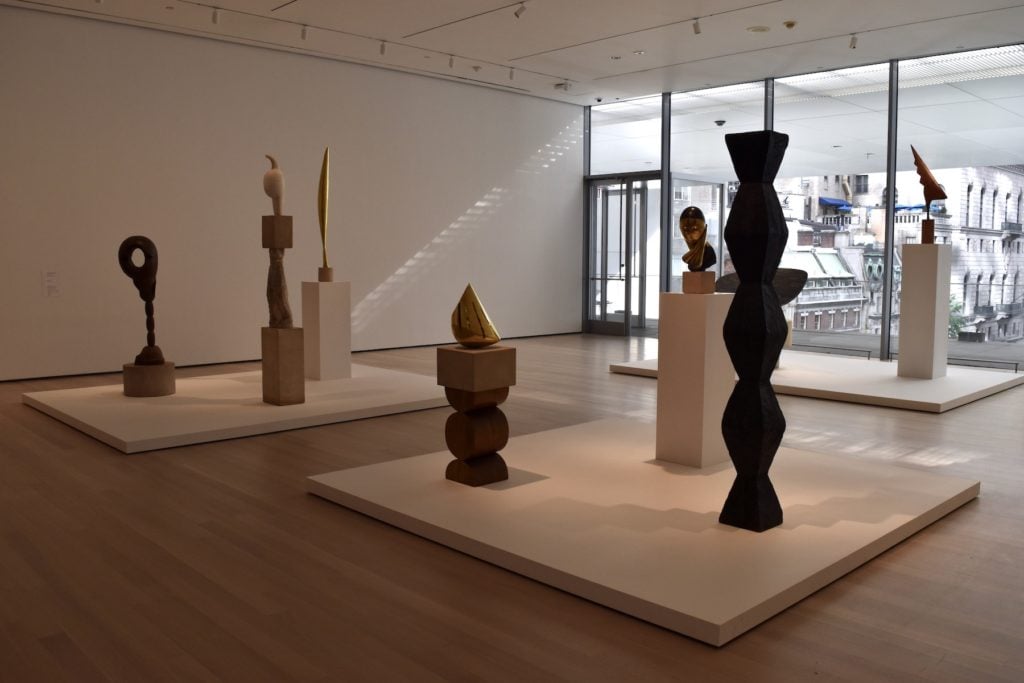
Various sculptures by Constantin Brancusi at the Museum of Modern Art in New York. Photo: Ben Davis.
The idea that a giant like Brancusi needs anything may seem “conceited,” Glimcher acknowledged, “but that’s not true. Because art gets calcified. Right now, there’s a very strong moment in trying to understand what happened in Paris 100 years ago. Is that so terribly different from our own time? We want to take it into a conversation that’s relevant to our artists.”
The Brancusi estate is owned by Théodor Nicol and managed by the Nicol family, according to Pace.
The artist never married and had no universally recognized direct heirs. Late in life, he became close to the Romanian artists Natalia Dumitresco and Alexandre Istrati, who lived near him in Paris and effectively became his caretakers, assistants, and artistic confidants. In his will, Brancusi left much of his studio contents and estate to them. Théodor Nicol was their nephew and heir, according to a Pace spokesperson.
“We’re excited to begin what we believe will be a fruitful collaboration with Pace,” Nicol said in a statement. “We look forward to working together to reintroduce Brancusi’s progressive yet ageless sculptures to audiences around the world, ushering his legacy into the future.”
[ad_2]
Source link