[ad_1]
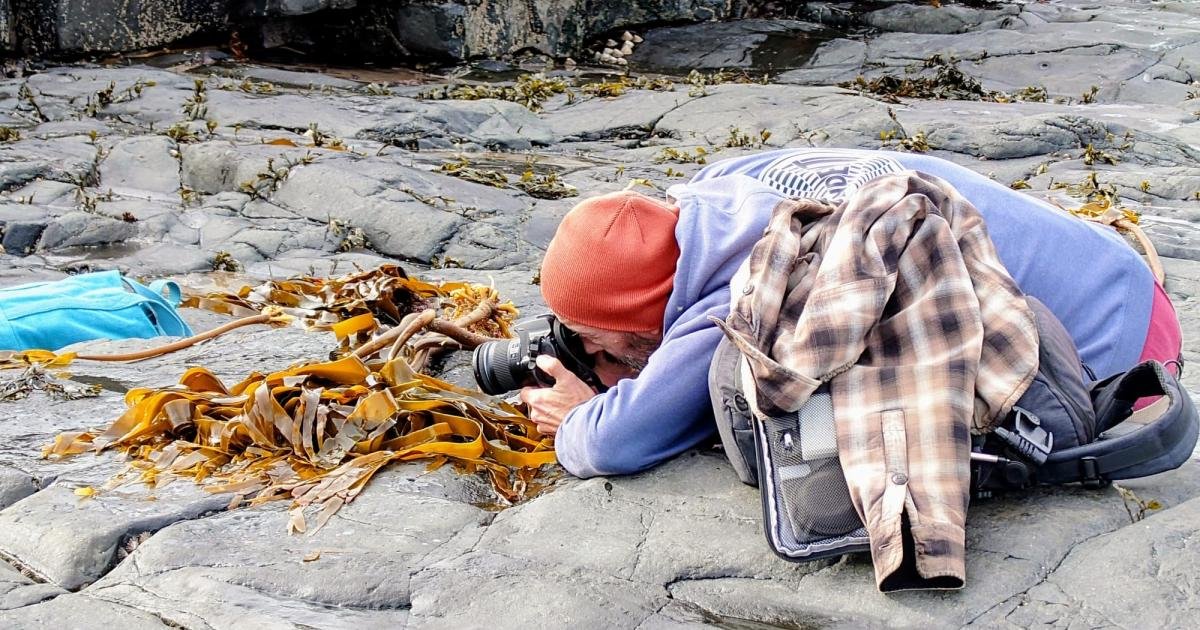
Durham Wildlife Trust has been working with artists to explore the qualities of kelp and seagrass, culminating in exhibitions in County Durham and Northumberland.
The Trust teamed up with the East Durham Artists’ Network (EDAN), based at Seaham, to produce artworks inspired by kelp as part of the ‘Stronger Shores’ project.
It also worked with artists Luke McTaggart and Katherine Rousselange, of Dovecot Street Arts, in Northumberland, to study seagrass through the ‘North Side’ project.
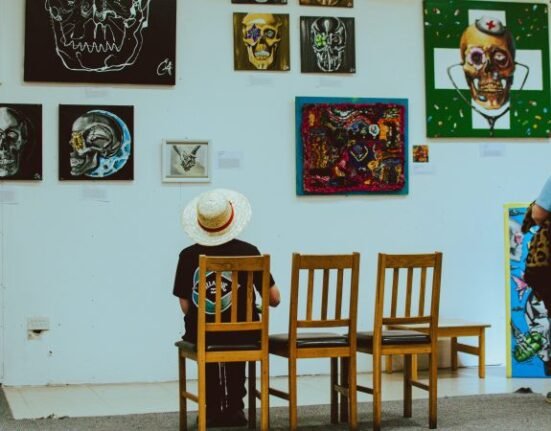
The work has now come together in exhibitions, in March and April, at the EDAN Gallery, in Seaham, and the Dry Water Arts Centre, in Amble.
The Seaham exhibition features photography, ceramics, and glasswork, while beautiful acrylics and audio-visuals are part of the display in Amble.
Blair Watson, Marine Engagement Officer, for Durham Wildlife Trust, said the art projects had enabled local communities to learn more about the “often overlooked” marine habitats.
“Working with the EDAN group, as well as the many artists of the North Side project, has been a brilliant experience,” said Blair.
“Their passion and enthusiasm has really elevated these projects and I can’t wait for the communities of Seaham, Amble and beyond to explore this work.
“These artists are helping folks to build an emotional connection to their marine habitats, and that really drives people to care for their natural world.”
Angela Sandwith, co-chair of EDAN, added: “Our members have thrown themselves into the project and, after almost a year of research, they have produced some exciting responses in art. We are looking forward to welcoming visitors to the EDAN Gallery to see this exhibition and share the kelp experience.”
- The kelp exhibition runs until April 25 at the EDAN Gallery, in Church Street, Seaham. The seagrass exhibition runs until April 1 at The Dry Water Arts Centre, Wellwood Street, Amble (Mondays 9am-10.30am and 3.30pm-5pm; and Tuesdays 9am to 12pm. Other times by arrangement – email info@drywaterarts.uk)
The project is funded by Defra as part of the £200m Flood and Coastal Innovation Programmes. Managed by the Environment Agency, the programmes will drive innovation in flood and coastal resilience and adaptation to a changing climate.
Kelp is a type of seaweed, which provides a host of benefits, but is often seen as a nuisance, while seagrass has been in rapid decline over the past century due to human pressures and disease.
Through Stronger Shores, kelp and seagrass are two of three habitats being explored to limit the impact of coastal erosion.
Durham Wildlife Trust is investigating the potential for kelp to be grown offshore on specialised units provided by Scarborough company Seagrown, and the Trust is also piloting trial sites for the restoration of seagrass in selected sites in the rivers Aln, Don and Wansbeck.
[ad_2]
Source link