[ad_1]
Unlike work shown in the privacy of a gallery, it doesn’t politely ask for attention: it occupies space that belongs to us all. You may have noticed a new artwork in your town centre, park, or neighbourhood and wondered whether it fits its surroundings, reflects local life, or simply feels imposed.
In the UK, public art has a long, evolving tradition – from commissions and festivals to community-led initiatives. Planning policies often expect new developments to make (some) room for art and culture, and research shows links between public art, economic growth in regenerating areas and benefits for social cohesion and wellbeing. Yet, as the 2025 Autumn Budget demonstrated, times are hard, funding is scarce, and competition for resources is fierce.
When budgets are tight and civic debate polarised, public art is caught between two unhelpful extremes. At one end, its existence may provoke criticism as a frivolous expense when other needs seem more urgent. At the other, fear of controversy may nudge commissioners towards safe, decorative works that offend no one but rarely provoke thought.
Public art has also inherited a perception from centuries of monuments that it must be big, solid and permanent – a statue, a huge mural, a landmark sculpture designed to last decades. In reality, public art can be temporary, performative, digital, participatory, or deliberately fleeting. I am especially drawn to work that is modest in scale and light on its feet.
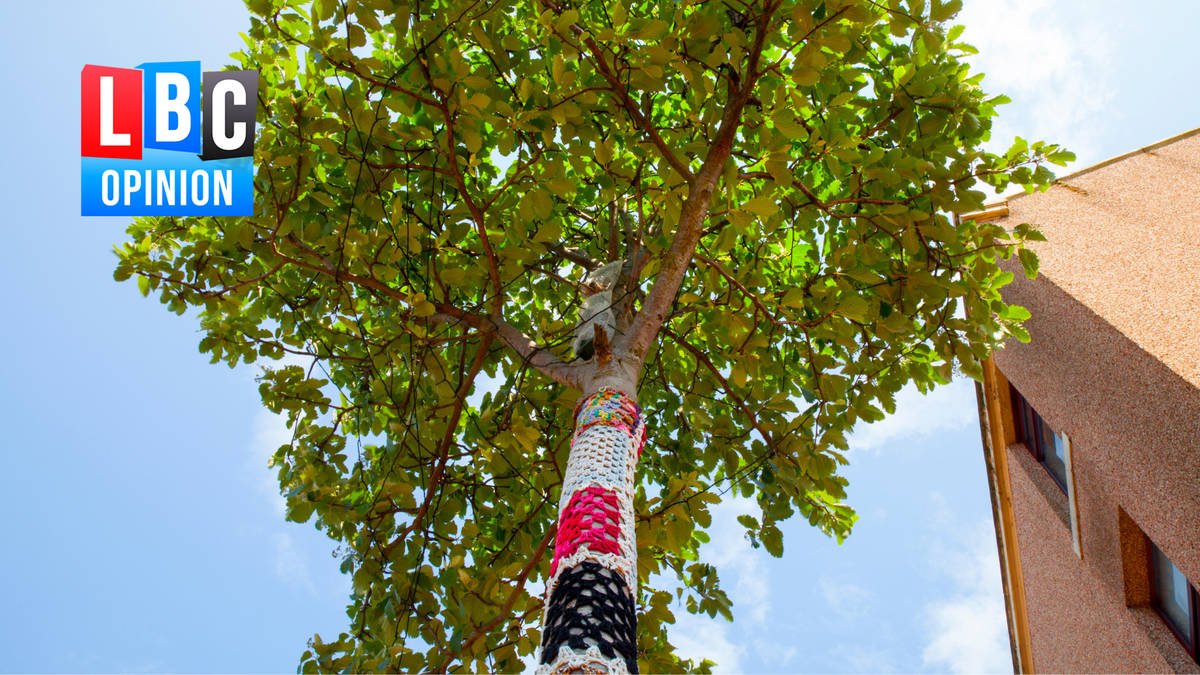
Though I work in the arts and am inevitably biased, I acknowledge that public art entails more responsibility: even when privately funded, it occupies collective space. Pleasing everyone is impossible, and not the point. This brings me to a proposal I like to call “the tree test”. When planning a public artwork, especially outdoors, we might ask whether a tree would be better there instead.
This is not an argument against art, but a prompt to consider whether a commission meaningfully contributes to civic life or simply fills a gap. In an age of climate emergency, comparing art with urban trees is uncomfortable but necessary. The value lies not in a definitive answer, which will always be subjective, but in asking, which sharpens accountability.
Does this put pressure on public art? Inevitably. Can art ever be better than a tree? Probably not, but great art can be a strong contender. If so, does it deserve public funding? Absolutely. Public art matters because it reminds us, even more so in an age of hardship, that culture is not a luxury, but a shared civic resource.
Perhaps, though, we should invest differently: I would like to see fewer colossal statements and more small-scale, temporary interventions, involving more artists and reaching more communities. Not all would pass the test of the tree. But impermanence allows risk. And if it divides opinion, so be it. Public art does not need to unite us. It needs to engage us.
____________________
Dr Jacek Ludwig Scarso is an art curator and researcher, Reader in Art & Performance at London Metropolitan University.
LBC Opinion provides a platform for diverse opinions on current affairs and matters of public interest.
The views expressed are those of the authors and do not necessarily reflect the official LBC position.
To contact us email opinion@lbc.co.uk
[ad_2]
Source link